
Why Does My Kitchen Sink Keep Clogging?
A kitchen sink keeps clogging because buildup narrows the drain line faster than daily water flow washes the buildup away. Grease coats the pipe wall, food debris sticks to the grease, and soap residue seals the layer in place. A clearing that opens a hole through the middle of the buildup fixes the symptom for a few weeks, and the layer keeps growing until the hole closes again. Repeat clogs in Fort Pierce kitchens trace back to 4 causes: grease buildup, food debris, garbage disposal habits, and old pipes.
Is grease the main reason a kitchen sink keeps clogging?
Yes, grease is the main reason most kitchen sinks keep clogging. Cooking oil, butter, and pan fat enter the drain as warm liquids and cool into a sticky solid on the pipe wall. Hot water from the faucet remelts only the surface of the layer, and the core of the layer stays in place. Each cooking session adds material. A drain line that began at 1.5 inches (3.8 cm) of open width narrows a fraction at a time, and water flow slows more each month until the sink starts pooling.
What role does food debris play in repeat clogs?
Food debris gives the grease layer a rough surface to grab onto, and the combined mass grows much faster than grease alone. Coffee grounds clump into dense plugs. Rice and pasta absorb water inside the pipe and swell. Potato peels and fibrous vegetable scraps bridge across the pipe opening and trap whatever comes down next. A sink with heavy food debris and a thin grease layer clogs in the trap area, and a plunger or a trap cleaning clears that clog — until the next load of scraps lands in the same spot.
Can garbage disposal habits make a sink clog again and again?
Yes, garbage disposal habits feed repeat clogs in 3 ways. First, grinding large loads at once pushes a thick paste into the line. Second, running the disposal with warm water or no water leaves the ground food sitting in the trap instead of flushed into the wider main line. Third, grinding grease-heavy leftovers coats the pipe with fat the disposal cannot break down. The result is a garbage disposal backup: the disposal runs, and water rises in the second basin because the shared line past the disposal is already narrowed. The prevention side of this problem is covered in how to prevent kitchen sink clogs.
Do old pipes cause recurring clogs?
Yes, old pipes clog repeatedly because corrosion and scale roughen the inside wall, and a rough wall catches debris that a smooth wall releases. Galvanized steel lines in older Fort Pierce homes build up rust scale over decades, and cast iron develops a pitted surface. A rough section of pipe re-clogs at the same location no matter how well the rest of the line is cleaned, and a clog that returns to the identical spot within weeks points at the pipe itself rather than at kitchen habits.
Why does the clog come back after plunging?
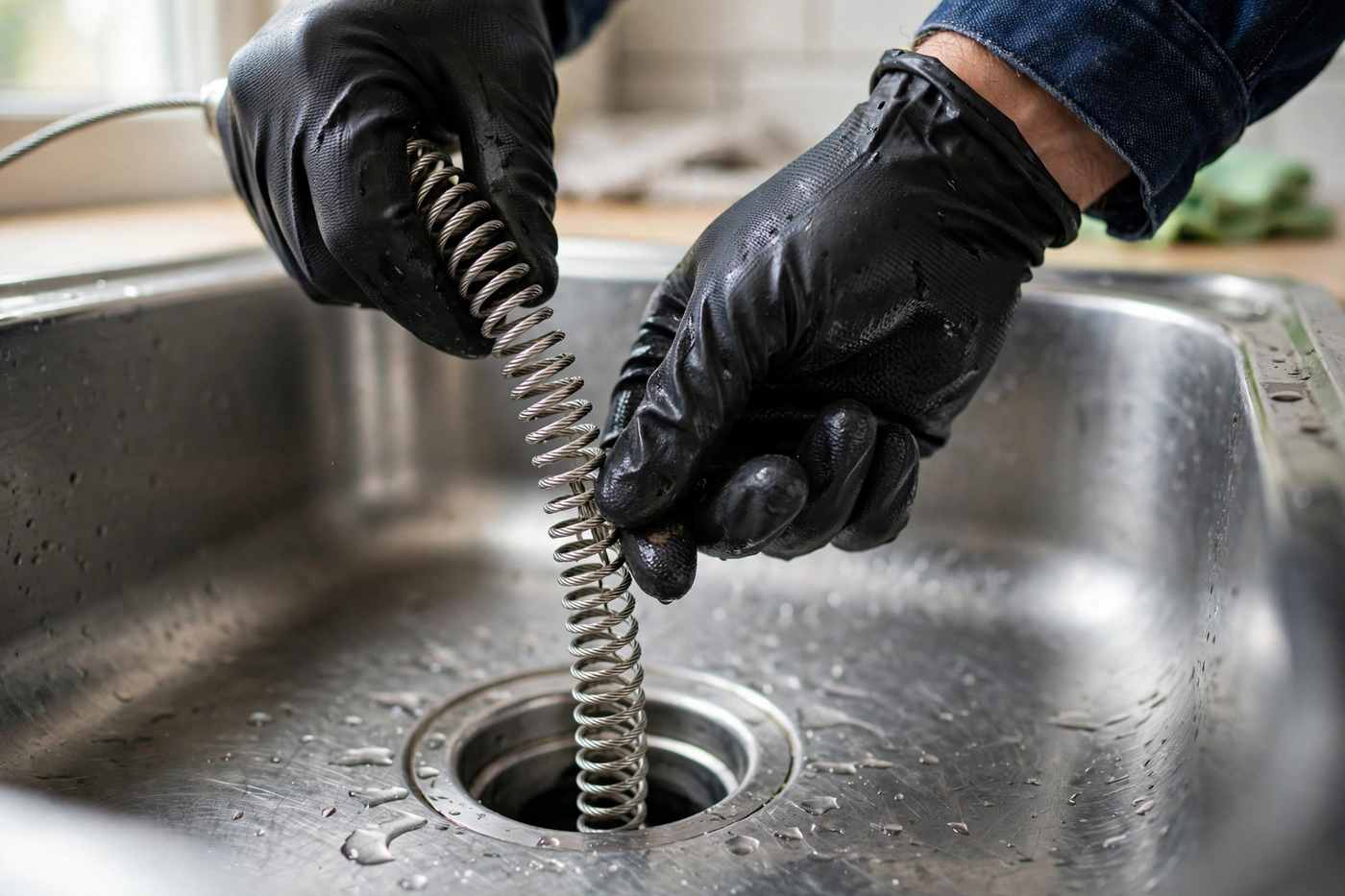
Plunging pushes a soft plug apart, and plunging does not remove the grease layer on the pipe wall. The plunger clears the loose mass in the trap, water flows again, and the underlying narrowed line stays narrowed. Mechanical clearing with a drain auger scrapes the line wider, and hydro jetting scours the wall coating off. The full clearing process is described on the kitchen sink unclogging service page, and the kitchen sink unclogging Fort Pierce FL homepage lists the warning signs that separate a simple clog from a line problem.
Frequently Asked Questions
How can a homeowner tell whether the clog is in the trap or the wall line?
A clog in the trap blocks one sink quickly, and a clog in the wall line slows both basins and often makes the sink gurgle. A trap clog usually follows a single heavy use and clears when the trap comes off and gets cleaned out. A wall-line clog builds over weeks, affects the garbage disposal side and the plain side together, and returns after the trap is cleaned.
Does running hot water after cooking stop a sink from clogging again?
Hot water slows grease buildup, and hot water does not remove a grease layer that has already formed. Hot water keeps fresh grease moving further down the line, where the line is wider. A formed layer needs mechanical removal with an auger or hydro jetting.
When should a homeowner call a professional about a recurring clog?
Call a professional when the clog returns within a few weeks of a clearing, when both basins back up together, or when the drain gurgles and smells between clogs. Those 3 signs point to buildup or damage deep in the line. Fort Pierce Sink Pros clears kitchen drains across St. Lucie County and can be reached at (772) 218-3739.
Sink keeps clogging in Fort Pierce? Call Fort Pierce Sink Pros.
Call (772) 218-3739