
Prevent Damage
Kitchen Sink Grease Clog Removal in Fort Pierce, FL
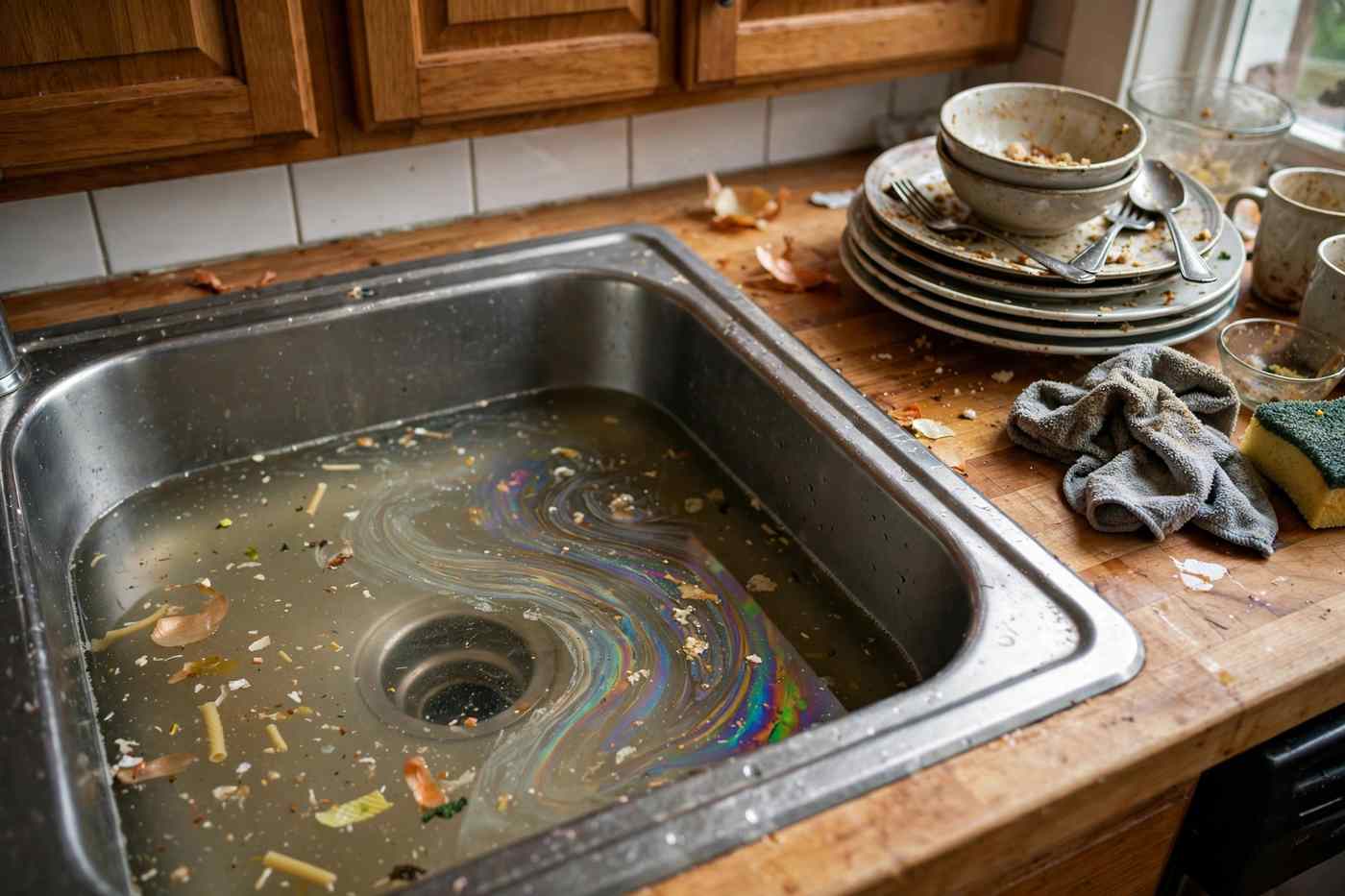
Grease is the most common cause of kitchen sink backups in Fort Pierce homes. Fort Pierce Sink Pros removes grease clogs by breaking up the hardened layer inside the drain line and flushing the pipe clean, so the sink drains at full speed again. Call (772) 218-3739 to describe what your sink is doing.
How a Grease Clog Forms
Cooking oil, butter, and animal fat go down the drain as warm liquids. A few feet into the pipe, the grease cools against the pipe wall and sticks as a soft, sticky layer. The next rinse adds another layer on top of the first. Food particles, coffee grounds, and soap residue catch in the grease and stay there instead of washing through.
The pipe narrows a little at a time. A kitchen drain that started with an open width of about 1.5 inches can be coated down to a narrow channel after years of daily cooking. The channel passes water for a while, which is why a grease clog builds quietly for months before the sink finally stops draining.
Signs the Clog Is Grease
- The sink drains slower after cooking a greasy meal than it does in the morning.
- The clog returns at the same spot weeks after a plunger or a light cleaning cleared it.
- A greasy or sour smell rises from the drain, especially when hot water runs.
- Water pools in the basin during dishwashing and drains away slowly afterward.
- The garbage disposal pushes ground food back up into the second basin.
How Grease Clog Removal Works
- Locate the grease. The trap comes off first and gets cleaned by hand, because the trap holds the first grease deposit. If the line still runs slow with the trap clean, the coating sits deeper in the wall line.
- Break the mass with an auger. A drain auger feeds into the line and its rotating head cuts a working path through the grease, so water can move through the pipe again.
- Scour the wall with hydro jetting. An auger opens a path but leaves grease coating the rest of the pipe wall. Hydro jetting uses a high-pressure water nozzle to scour that coating off the full inside of the pipe, which is what keeps the clog from rebuilding at the same spot.
- Flush and test. The line is flushed with running water, and both basins are filled and released together. A line that takes the full load with no pooling and no backup is clear.
Why Hot Water and Chemical Cleaners Don't Finish the Job
Hot tap water melts only the grease it touches near the drain opening. The water cools as it travels, and the melted grease hardens again at the next cool section of pipe, sometimes deeper than the original clog. Chemical drain cleaners work the same way on a small scale: the chemicals dissolve a little material near the opening and rarely reach a clog seated several feet into the line. Mechanical removal — an auger and a jet of water along the pipe wall — is what takes the full layer out.
Keeping Grease Out of the Line
- Wipe greasy pans with a paper towel before washing, and throw the towel in the trash.
- Pour cooled cooking oil into a jar or can and throw it away instead of rinsing it down the drain.
- Run cold water while the garbage disposal grinds, so ground food moves through the line in small pieces instead of settling.
- Scrape plates into the trash first. A strainer catches scraps, and grease passes through a strainer as liquid, so the habits above matter more than the strainer.
Frequently Asked Questions
Will the grease clog come back after removal?
A grease clog rebuilds only if grease keeps going down the drain. Removing the full coating, including the layer an auger leaves behind, resets the pipe to its full width. Wiping pans and jarring cooking oil instead of rinsing them keeps the new layer from forming.
Is hydro jetting always needed for a grease clog?
No — a short grease plug near the trap can clear with trap cleaning and an auger alone. Hydro jetting matters when the coating runs along several feet of pipe wall, because the auger leaves that coating in place and the clog rebuilds on it. The length of the coating, found during the visit, decides the tool.
How long does grease clog removal take?
The time depends on how far the grease coating runs and where it sits. A deposit in the trap clears quickly. A coating that runs through the wall line takes longer because the auger and the jetter work the full length of the pipe, and the line gets a flow test at the end either way.
Related Services
- Kitchen sink drain unclogging — the full unclogging service
- Kitchen sink P-trap cleaning
- Double kitchen sink unclogging
- Kitchen sink drain snaking
- Kitchen sink unclogging cost guide
Kitchen sink draining slowly or backing up in Fort Pierce? Fort Pierce Sink Pros is open 24/7 — call any time.
Call (772) 218-3739