
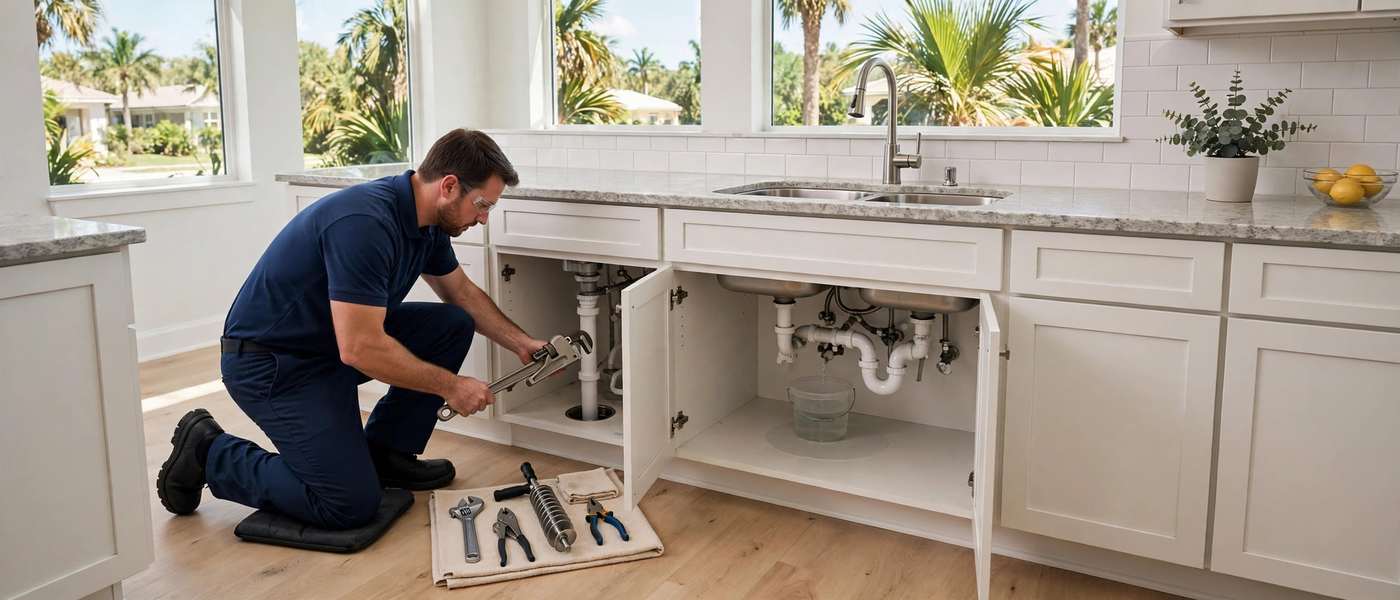
How to Prevent Kitchen Sink Clogs
You prevent kitchen sink clogs by keeping grease out of the drain, catching food scraps before the drain opening, and flushing the line with hot water on a regular schedule. Kitchen drains clog from accumulation, not from a single event. Four habits control the accumulation: grease disposal in the trash, sink strainer use, hot-water flushing, and correct garbage disposal habits. Each habit targets one stage of the buildup that the kitchen sink unclogging Fort Pierce FL homepage describes.
How should cooking grease be disposed of?
Cooking grease belongs in a heat-safe container in the trash, not in the drain. Pour used oil and pan fat into a can or jar while the grease is still liquid, let the container cool until the grease solidifies, and throw the container out with household trash. Wipe greasy pans with a paper towel before washing, and throw the towel away. A paper towel removes the thin fat film that dish soap would otherwise carry into the drain line. The drain should receive only soapy water with trace amounts of fat, never a pour of oil.
Do sink strainers really prevent clogs?
Yes, a sink strainer prevents the food-debris half of a clog by catching solid scraps at the drain opening. A mesh strainer that fits the drain opening stops rice, pasta, vegetable peelings, and coffee grounds before the pipe. Empty the strainer into the trash after each wash-up, because a full strainer overflows and lets scraps past. A strainer does not stop grease or soap residue, which pass through the mesh as liquids — strainers work as one habit alongside grease disposal, not as a replacement for grease disposal.
Does flushing the drain with hot water help?
Yes, flushing with hot water after greasy washing keeps fresh grease moving through the line before the grease can harden. Run the hot tap for 30 to 60 seconds after washing greasy dishes. The hot water carries softened fat past the trap and into the wider main line, where the fat spreads thinner and causes less narrowing. Weekly, fill the sink partway with hot water and release the water at once; the weight of a basin of water pushes loose material further than a thin stream from the faucet. Hot water prevents new layers, and hot water does not remove hardened layers already on the wall — a line that already drains slowly needs the mechanical clearing described on the kitchen sink unclogging service page.
What are the garbage disposal do's and don'ts?
The garbage disposal prevents clogs when food goes in small loads with plenty of cold water, and the disposal causes clogs when food goes in large loads with little water.
- Do run cold water before, during, and for 15 to 30 seconds after grinding, so ground food flushes through the trap.
- Do feed scraps in small amounts instead of one packed load.
- Do scrape plates into the trash first and use the disposal for the residue that remains.
- Don't pour grease or oil into the disposal; the disposal cannot break down fat, and fat coats the line past the disposal.
- Don't grind large amounts of rice, pasta, or fibrous food at once; starchy and fibrous material swells and mats inside the pipe.
- Don't run the disposal with hot water; hot water melts fat inside the disposal chamber and deposits the fat further down the cooler line.
Frequently Asked Questions
Can grease go down the drain if hot water and dish soap run with the grease?
No, dish soap and hot water only move grease further down the pipe, and the grease hardens at the next cool section. Soap breaks grease into droplets for a short distance. The droplets join back together and coat the wall once the water cools. The trash container is the only disposal route that keeps grease out of the line entirely.
Are enzyme drain treatments useful for prevention?
Yes, enzyme treatments digest light organic buildup between deeper cleanings, and enzyme treatments work as maintenance on a line that still drains well. Enzymes need hours of contact time, so treatments go in at night. An enzyme treatment does not open a packed or fully blocked line.
What is the single most effective prevention habit?
Keeping grease out of the drain is the single most effective prevention habit, because grease is the base layer every other clog material sticks to. Without the grease layer, food particles wash through instead of anchoring to the wall. A kitchen that changes only the grease habit removes the foundation of most clogs. When a smell develops even in a well-kept sink, the causes are covered in why a kitchen sink drain smells bad.
Drain already slow in Fort Pierce? Call Fort Pierce Sink Pros.
Call (772) 218-3739