
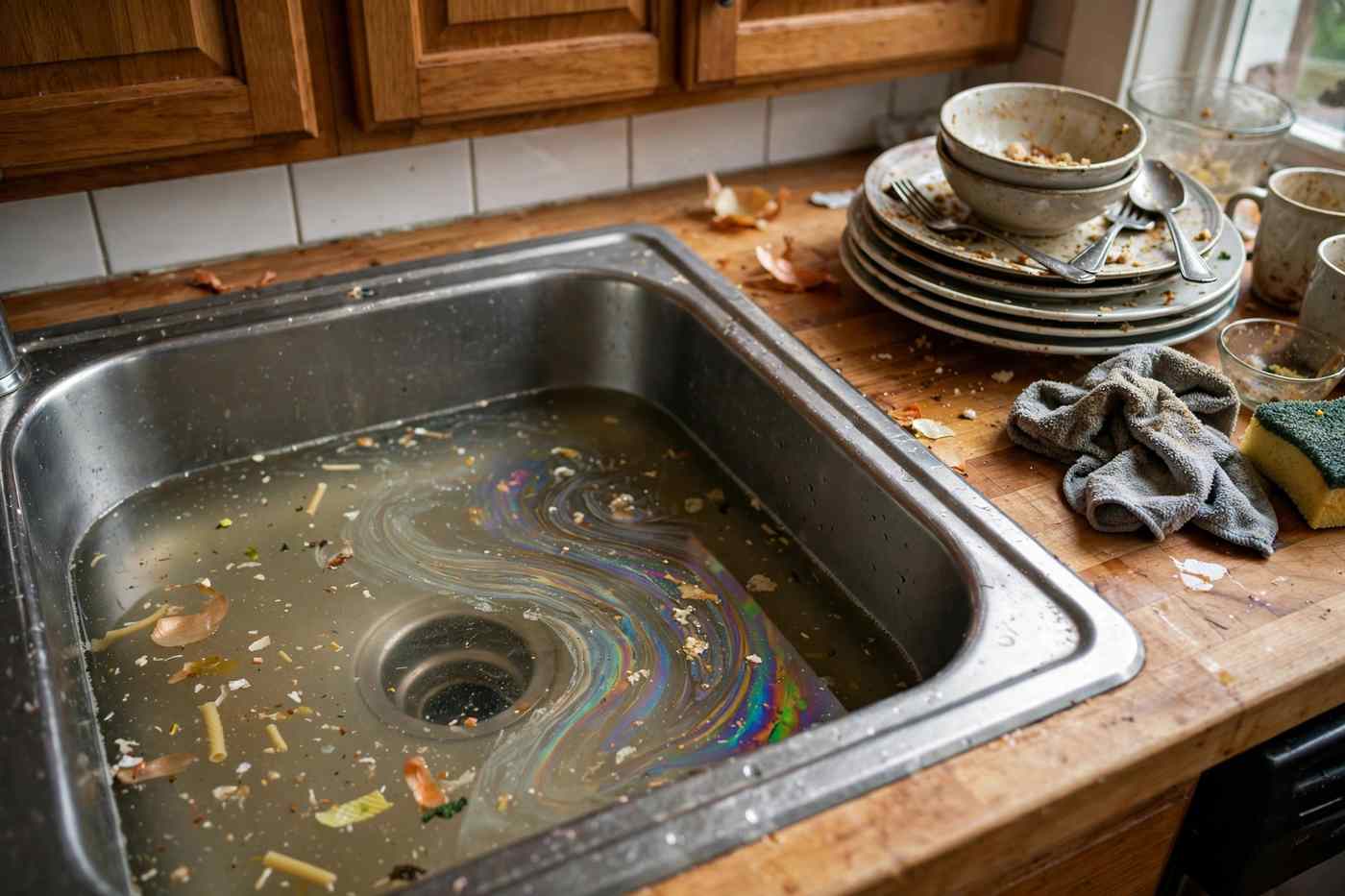
Kitchen Sink Draining Slowly? 6 Causes and What to Do
A kitchen sink draining slowly is a drain line in the process of closing, and slow drainage has 6 common causes. A slow drain is not a separate problem from a clog — a slow drain is a clog at an early stage. Water still passes, and the passing water carries a little more grease and food into the narrowed section each day. The 6 causes below are ordered from the drain opening downward, with the first check for each cause. The kitchen sink unclogging Fort Pierce FL homepage lists slow drainage first among the signs of a line that needs attention.
Cause 1: Is the strainer or drain opening blocked?
Yes, a layer of food scraps and grease on the strainer and the drain flange can slow the sink before the pipe is involved at all. The check takes one minute: lift the strainer, clear the scraps, scrub the flange, and run the water. Full-speed drainage after cleaning means the problem sat at the opening.
Cause 2: Is the trap partly filled?
Yes, a P-trap partly filled with settled food and grease slows every basin of water that passes through the trap. The trap is the lowest point of the under-sink plumbing, and heavy particles settle there instead of washing through. Slow drainage plus a sour smell from the drain points at the trap, because trapped food rots in the standing trap water. Emptying and rinsing the trap is the fix, and the trap procedure is described in why a kitchen sink drain smells bad.
Cause 3: Is a grease layer narrowing the wall line?
Yes, a grease layer in the wall line is the most common cause of a sink that drains slower every month. The pattern is gradual: the sink keeps up with a running faucet, then pools during dishwashing, then takes a minute to empty. Both basins slow down together, because both drain through the same narrowed section. A grease layer does not respond to plunging for long; the layer needs an auger or hydro jetting, as described on the kitchen sink unclogging service page.
Cause 4: Is residue built up inside the garbage disposal?
Yes, ground-food residue packed inside the disposal chamber and the disposal outlet slows the disposal side of a double sink. The tell is uneven drainage: the plain basin drains at full speed and the disposal basin lags. Run the disposal with cold water and a tray of ice cubes to knock loose material off the chamber walls. Slow drainage that continues after the chamber is clean sits past the disposal, in the shared line.
Cause 5: Is the plumbing vent blocked?
A blocked vent can slow a kitchen drain, because drain lines need air from the vent to flow at full speed. The vent pipe runs from the drain system up through the roof. Debris or a nest at the roof opening restricts the air, and the drain responds with slow flow and gurgling sounds as water pulls air through the trap instead. Gurgling at the kitchen sink when other fixtures drain is the vent pattern.
Cause 6: Is the problem the faucet instead of the drain?
Yes, a faucet aerator clogged with mineral sediment makes a sink look slow when the drain is fine. The test separates the two: fill a container at the tap and time the flow, then pour a full basin of water into the sink at once. A basin that empties fast under a full load means the drain is clear and the faucet is delivering water slowly. Unscrew the aerator at the faucet tip, rinse the sediment out of the screen, and refit the aerator.
Frequently Asked Questions
How long can a slow drain be left before the sink clogs fully?
A slow drain can take weeks or months to close fully, and the timeline shortens with every greasy load the line receives. There is no fixed deadline, because the rate depends on how much grease and food the household sends down. A slow drain is cheapest to clear at the slow stage, before the line closes and water backs up into the basins.
Does a slow drain on one side of a double sink mean a different cause?
Yes, one slow side points to that side's branch — the disposal chamber or that basin's tailpiece — and two slow sides point to the shared trap or wall line. The double-sink layout is explained in clogged double kitchen sink: why one side backs up.
When should a homeowner call a professional about a slow drain?
Call a professional when both basins drain slowly, when a cleaned trap does not restore full speed, or when slow drainage comes with gurgling or smell. Fort Pierce Sink Pros clears slow kitchen drains across Fort Pierce and St. Lucie County and can be reached at (772) 218-3739.
Kitchen sink draining slowly in Fort Pierce? Call Fort Pierce Sink Pros.
Call (772) 218-3739